
Honey, fermentation, and four months in Chile
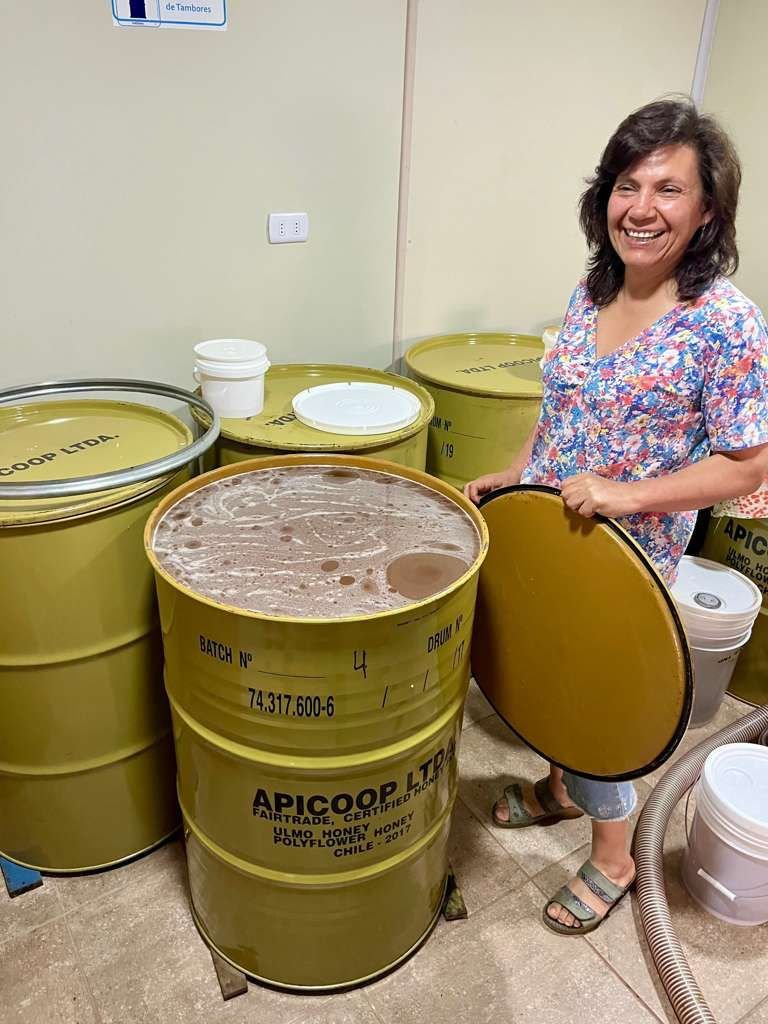
Beekeeper Carmen Villablanca with a drum of her incredible native-forest honey
Lago Ranco, Chile
The mead here in Chile is so damn good, especially the session-strength meads. It’s not surprising when you consider they have some of the best honey in the world. Tineo, Ulmo, Tiaca, Quilay, bees in southern Chile pull nectar from all kinds of native forest species to produce what’s known as “miel de bosque nativo” (native forest honey). The flavors can be remarkably complex.
Local mead makers have also incorporated preparation and fermentation techniques that really bring those flavors forward. Over the past four months I’ve been learning as much as I can about how they approach fermentation, honey handling, and balance. The goal is to take what I’ve learned here and incorporate it into the production process for Tineo.
The initial plan is to use the techniques I have learned here to make mead with local California honey, but I have no doubt that future varietals of Tineo Mead will incorporate honey from Chile as well.
A lot of our time has also been spent making mead and experimenting with variables. There have been a few “ah-ha” moments, which is always exciting, but the biggest lesson keeps coming back to something simple: clean, consistent fermentation is everything. Temperature control, oxygen management, and nutrient feeding strategy all matter enormously. If something is even slightly off, you can taste it.
That’s part of what makes session mead so interesting. There’s nowhere to hide defects. It’s surprisingly difficult to make consistently, but when it’s done right, it’s refreshing and full of character.
Our time in Chile is wrapping up for the year and we’ll be heading back to Sonoma County next week. We’re sad to leave, but also really excited to get to work. The plan is to move into a production space within the next few weeks. Once we secure a facility, we can start the licensing and permitting process. Approvals will likely take a few months, but during that time I’m looking forward to sharing updates on equipment installation and how product development at scale is going.
It’s starting to feel real.
More soon
Chris
